For a small business, making a sale is only half the job. You also need to make sure the customer actually pays. One or two late payments might not cause much trouble, but when unpaid invoices start adding up, they can put real pressure on your cash flow.
So, why do some customers pay on time while others keep putting off their invoices?
Sometimes, the reason is simple. The invoice was sent late, the payment terms weren’t clear, or no one followed up when the due date passed. In other cases, the customer may be dealing with their own cash flow problems.
That’s why knowing how to prevent overdue accounts is an important part of managing your business finances.
Let’s look at what causes overdue receivables, how to prevent them, and some simple steps you can take to get paid on time more often.
Why Do Businesses End Up with Overdue Accounts Receivable?
The first step is figuring out where things are going wrong, because late payments can happen for a few different reasons. Let’s see how we can reduce overdue in a business.
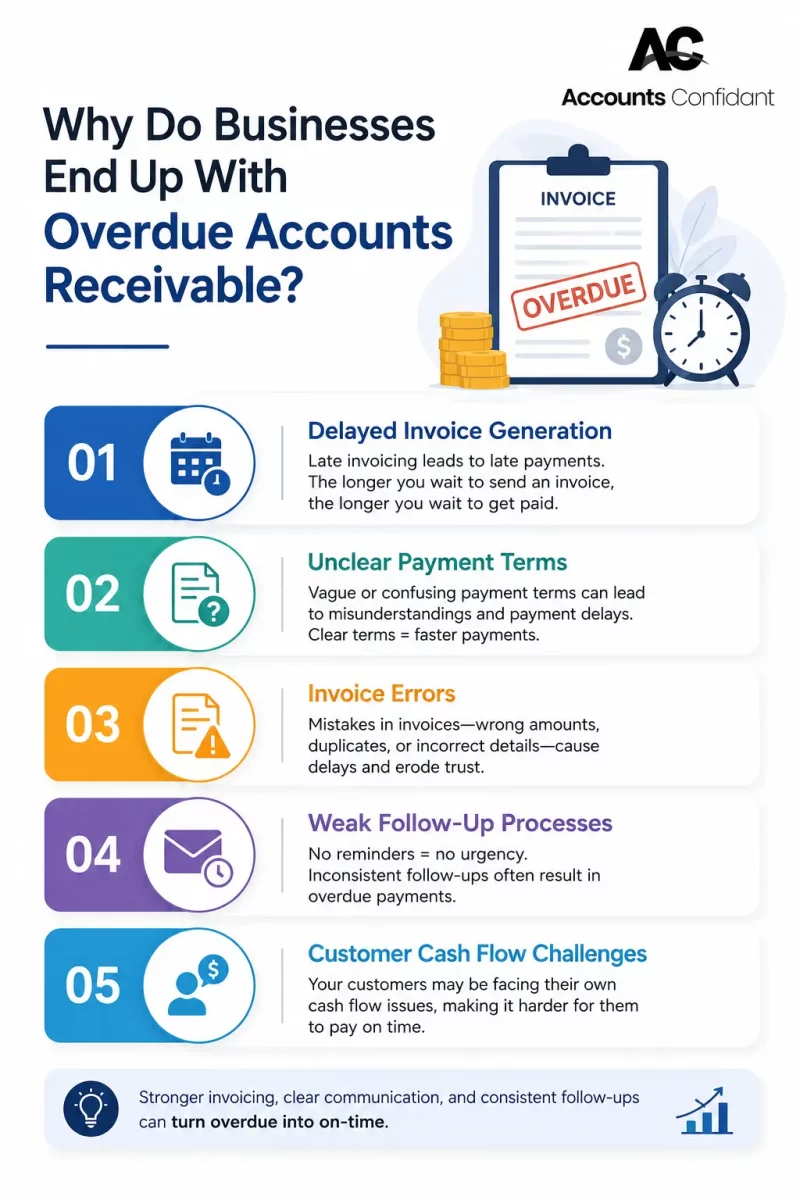
1. Invoices Are Sent Too Late
Sending invoices late delays the payment cycle before it even begins. Customers cannot pay invoices they haven’t received.
Invoices should be generated immediately after delivering products or completing services. Even a few days’ delay can push payment dates further out and affect monthly cash flow.
2. Payment Terms Aren’t Clear
Customers shouldn’t have to search through an invoice or contract to figure out when they’re expected to pay.
Your payment terms should clearly show:
- The due date
- Accepted payment methods
- Late payment terms, if applicable
- Where customers should send payment
- Who to contact about billing questions
Clear terms can also prevent unnecessary back-and-forth when a customer isn’t sure how much they owe or when payment is due.
3. The Invoice Contains an Error
A small mistake can put an invoice on hold.
For example, the customer may receive an invoice with the wrong amount, a missing purchase order number, incorrect billing details, or missing tax information. Instead of processing the payment, their accounts payable team may send it back for correction.
Before sending an invoice, take a moment to check the basic details. It can save much more time.
4. Nobody Follows Up
This is one of the easiest problems to overlook.
A business may have a good invoicing system but no clear process for what happens after an invoice is sent. If nobody is responsible for checking outstanding invoices, late payments can sit untouched for weeks.
A simple follow-up schedule can prevent this.
5. The Customer Is Having Cash Flow Problems
Not every late-paying customer is trying to avoid paying.
A customer may be dealing with their own cash flow problems, a delayed payment from one of their clients, or an internal accounting issue. Reaching out early gives you a chance to understand what’s happening before the balance becomes seriously overdue.
Keeping the conversation professional can also help you protect an otherwise good customer relationship.
Need help getting your overdue receivables under control? Get in touch with us to see how we can help.
How to Reduce Overdue Receivables
Here are a few practical strategies to reduce overdue receivables. Let’s go through them one by one:
1. Send Invoices Immediately
Don’t wait too long to send an invoice after completing a job or delivering a product. The sooner the customer gets the invoice, the sooner they can make the payment.
If possible, send invoices on the same day. You can also use accounting software to create and send invoices automatically, which saves time and reduces the chance of forgetting one.
2. Establish Clear Payment Terms
Customers should know when their payment is due and how they can pay. Keep your payment terms simple and clearly mention them on the invoice.
Also mention the accepted payment methods and any late payment charges. Clear terms can prevent confusion later.
3. Automate Payment Reminders
You don’t have to personally remember every invoice that is coming due. Automatic reminders can do much of the work for you.
A simple reminder schedule could look like this:
- 7 days before the due date
- On the due date
- 3 days after the due date
- 10 days overdue
- 20 days overdue
- Phone call after 30 days
This keeps the invoice on the customer’s radar without requiring your team to send every reminder manually.
4. Offer Multiple Payment Options
Make it easy for customers to pay you. If they have to go through a complicated payment process, they may put it off.
Depending on your business, you could accept:
- ACH transfers
- Credit cards
- Bank transfers
- Digital wallets
- Online payments
The more convenient the payment process is, the less likely it is to become a reason for delay.
5. Monitor Accounts Receivable Aging Reports
An accounts receivable aging report shows you which invoices have been paid and which ones are getting old.
Most reports group unpaid invoices into categories such as:
- Current
- 1–30 days overdue
- 31–60 days overdue
- 61–90 days overdue
- More than 90 days overdue
Check this report regularly instead of waiting until the end of the month. Pay extra attention to large invoices and anything that has been unpaid for 60 days or more.
6. Resolve Invoice Disputes Quickly
Sometimes a customer isn’t paying because there is a problem with the invoice. Maybe the amount is wrong, a purchase order is missing, or they don’t agree with a charge.
Don’t let these issues sit unresolved. Find out what the problem is, involve the right team member, and correct it as soon as possible. The sooner the issue is cleared up, the sooner the payment can move forward.
6. Track Key Accounts Receivable KPIs
You don’t need to track dozens of numbers to understand how well your collections are working. A few basic metrics can tell you a lot.
Some useful ones include:
- Days Sales Outstanding (DSO)
- Accounts Receivable Turnover Ratio
- Collection Effectiveness Index (CEI)
- Average Days Delinquent (ADD)
- Percentage of overdue receivables
Review these numbers regularly. If overdue receivables keep increasing or customers are taking longer to pay, it may be time to look at your invoicing and collection process.
Common Mistakes That Increase Overdue Receivables
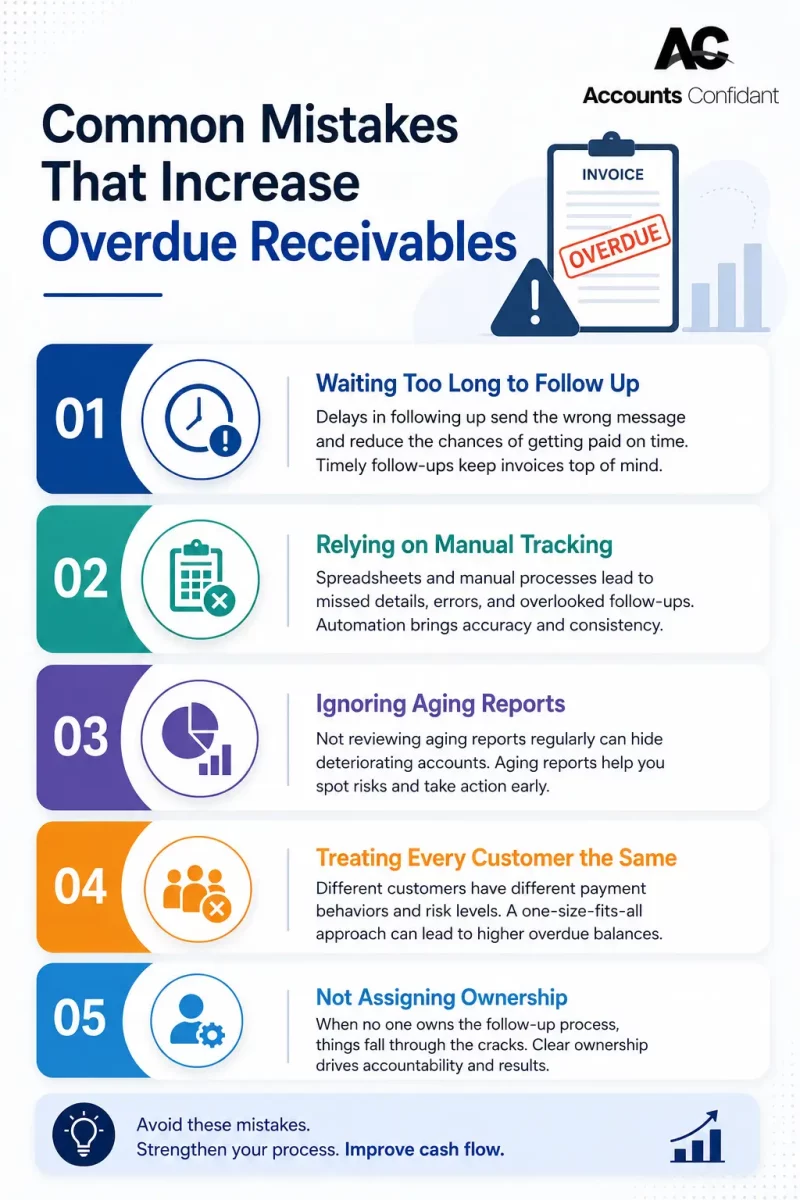
Many businesses unintentionally create overdue receivables through inconsistent internal processes. Avoiding these common mistakes can significantly improve collection rates.
Waiting Too Long to Follow Up
Delaying reminders often signals that late payments are acceptable. Early communication keeps invoices top of mind and encourages prompt payment.
Relying on Manual Tracking
Spreadsheets are difficult to maintain as invoice volumes increase and can lead to missed follow-ups or reporting errors.
Ignoring Aging Reports
Failing to review aging reports regularly allows overdue balances to grow unnoticed until they become difficult to recover.
Treating Every Customer the Same
Different customers require different collection strategies based on payment history, invoice value, and business relationship.
Not Assigning Ownership
Collections become inconsistent when no individual or team is responsible for monitoring overdue invoices and following up with customers.
When Should You Seek Overdue Bookkeeping Help?
If overdue receivables continue increasing despite your internal efforts, it may be time to seek professional overdue bookkeeping help.
Common signs include:
- Overdue invoices are increasing month after month.
- Payments regularly exceed 60 or 90 days.
- Cash flow has become unpredictable.
- Your team spends excessive time following up on invoices.
- Collections distract employees from higher-value work.
If keeping up with overdue payments is taking more time than you can manage, getting the right bookkeeping support can make things easier. Reach out to see how we can help you stay on top of your receivables.
Accounts Receivable vs. Overdue Receivables
All overdue receivables are accounts receivable, but not all accounts receivable are overdue. An invoice only becomes overdue once its payment deadline has passed.
Understanding this distinction helps businesses prioritize collection efforts rather than treating every unpaid invoice the same way.
| Accounts Receivable | Overdue Receivables |
| Payment is not yet due | Payment deadline has passed |
| Part of normal business operations | Requires collection efforts |
| Expected to be paid on time | Carries a higher collection risk |
| Supports revenue forecasting | May negatively affect cash flow |
Case Studies
Janice: Struggling With Late Customer Payments
Janice came to us because she was having a hard time keeping up with unpaid invoices. Some customers were taking weeks to pay, and she wasn’t sure which invoices needed follow-up first. We helped her organize her receivables and set up a simple reminder process. This made it easier for Janice to track overdue payments and follow up on time.
Mark: Losing Track of Overdue Invoices
Mark reached out to us when overdue invoices started becoming a regular problem in his business. His team was tracking payments manually, so older invoices were sometimes missed. We helped organize his accounts receivable aging and set up regular follow-ups. Mark now has a clearer view of what is still unpaid and which customers need attention.
Conclusion
Reducing overdue receivables requires more than sending occasional payment reminders. Businesses that consistently invoice on time, establish clear payment terms, monitor aging reports, and follow structured collection processes are better positioned to improve cash flow and reduce financial risk.
If your business continues to struggle with overdue accounts receivable, it may be time to strengthen your internal processes or consider professional support. The right approach can reduce collection delays, improve customer payment behavior, and free your team to focus on growing the business instead of chasing unpaid invoices.
Frequently Asked Questions
How do I reduce overdue invoices from customers?
Send invoices on time, use clear payment terms, and set up payment reminders. Regularly check your aging report and follow up quickly when an invoice becomes overdue.
What’s a good process for following up on late payments?
Send a friendly reminder before the due date and another one when the payment is due. If the invoice remains unpaid, follow up again after a few days and call the customer if needed.
Should I hire an accounts receivable service or handle collections myself?
It depends on your business. If you only have a few invoices to manage, you can handle collections yourself. If overdue payments are increasing or taking too much of your team’s time, an accounts receivable service may help.
How can a small business improve cash flow from unpaid invoices?
Send invoices as soon as possible, make it easy for customers to pay, and follow up on overdue invoices regularly. Keeping a close eye on your aging report can also help you spot payment problems early.
What’s the difference between accounts receivable and accounts payable services?
Accounts receivable services deal with money coming into your business from customers. Accounts payable services deal with money going out to suppliers and vendors.
When should I send a customer’s invoice to collections?
Try to contact the customer several times before sending an invoice to collections. If they still don’t pay or stop responding, you may want to consider collection services.
How do outsourced bookkeeping or accounts receivable services help with late-paying clients?
We can track unpaid invoices, send payment reminders, update records, and follow up with customers. This saves your team time and helps keep overdue payments under control.
What credit policy should I set for new customers to avoid non-payment?
Set clear payment terms and credit limits for new customers. For larger jobs, you can also ask for a deposit and check the customer’s payment history before offering credit.