
Many business owners confuse accounts receivable (AR) and accounts payable (AP) because both involve money that has not been paid yet.
The difference is simple:
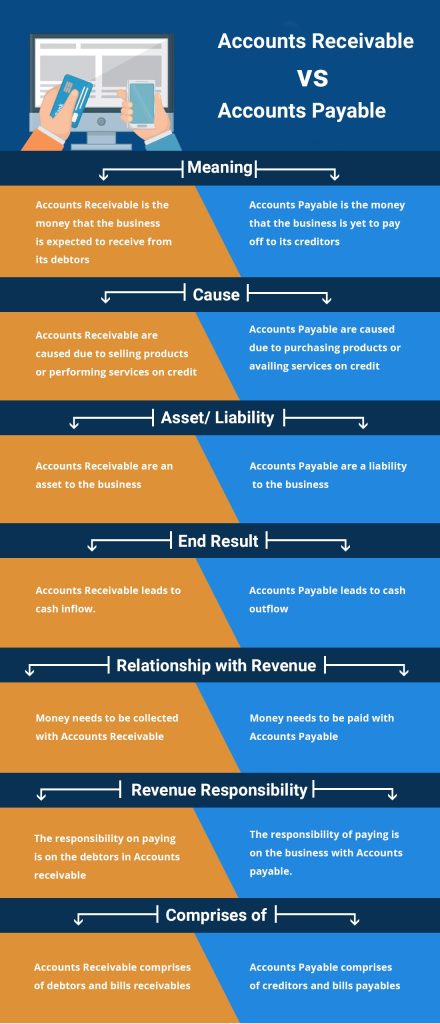
Accounts receivable is money customers owe your business. Accounts payable is money your business owes to suppliers and vendors.
AR represents future cash coming into your business. AP represents future cash leaving your business.
Understanding the difference between accounts receivable vs accounts payable helps you manage cash flow, prepare accurate financial statements, and avoid accounting mistakes.
This guide explains AR and AP with examples, journal entries, balance sheet treatment, cash flow impact, and best practices for small businesses.
What Is the Difference Between Accounts Receivable and Accounts Payable?
The main difference between accounts receivable and accounts payable is who owes the money.
- Accounts receivable (AR): Money owed to your business by customers.
- Accounts payable (AP): Money your business owes to suppliers or vendors.
Think of it from your business’s point of view:
| Category | Accounts Receivable (AR) | Accounts Payable (AP) |
| Meaning | Money customers owe you | Money you owe others |
| Cash movement | Money coming in | Money going out |
| Accounting type | Current asset | Current liability |
| Normal balance | Debit | Credit |
| Created from | Sales on credit | Purchases on credit |
| Managed by | Collections / AR team | AP team |
A simple way to remember:
Receivable = Receive money
Payable = Pay money
What Is Accounts Receivable (AR)?
Accounts receivable is the amount customers owe a business for products or services already delivered but not yet paid for.
When a business sells something on credit, it creates an account receivable.
Example:
A marketing agency completes a $5,000 project for a client.
The client receives an invoice with payment terms of Net 30.
The agency records:
- Revenue earned: $5,000
- Accounts receivable: $5,000
The money is not in the bank yet, but the business has the right to collect it.
Common examples of accounts receivable include:
- Customer invoices
- Service payments due
- Credit sales
- Outstanding client balances
Businesses usually track AR using an accounts receivable aging report, which shows how long invoices have been unpaid.
Also Read:- How to Migrate from QuickBooks Desktop to Online?
Is Accounts Receivable an Asset or Liability?
Accounts receivable is a current asset because it represents money the business expects to receive.
Assets are resources that provide future economic value.
Since AR is expected to convert into cash, it appears under current assets on the balance sheet.
Example balance sheet section:
Current Assets
- Cash: $20,000
- Inventory: $30,000
- Accounts receivable: $15,000
Total current assets: $65,000
What Is Accounts Payable (AP)?
Accounts payable is money a business owes to suppliers, vendors, or service providers for purchases made on credit.
When a business receives goods or services but pays later, it creates an accounts payable balance.
Example:
A company purchases office equipment worth $3,000 from a supplier.
The supplier gives payment terms of Net 30.
The company records:
- Equipment expense or asset: $3,000
- Accounts payable: $3,000
The company has received the benefit but has not paid yet.
Common examples of accounts payable include:
- Supplier invoices
- Software subscriptions
- Office expenses
- Inventory purchases
- Professional services
Is Accounts Payable an Asset or Liability?
Accounts payable is a current liability because it represents money the business must pay.
Liabilities are obligations owed to others.
Example balance sheet section:
Current Liabilities
- Accounts payable: $25,000
- Loans payable: $50,000
Total current liabilities: $75,000
Accounts Receivable vs Accounts Payable Example
The same business transaction can create accounts receivable for one company and accounts payable for another company.
Example:
A web development company creates a website for a customer.
The invoice amount is $10,000 with Net 30 payment terms.
Seller’s Accounting
The web development company records:
Accounts Receivable: $10,000
Revenue: $10,000
The company is waiting to receive payment.
Buyer’s Accounting
The customer records:
Expense or Asset: $10,000
Accounts Payable: $10,000
The customer owes money to the vendor.
The same invoice creates two different accounting records depending on which side of the transaction you are on.
How Do AR and AP Affect Cash Flow?
Accounts receivable and accounts payable directly affect how much cash a business has available.
Cash flow problems often happen when businesses earn revenue but do not collect payments quickly enough.
How Accounts Receivable Affects Cash Flow
Higher accounts receivable can reduce cash flow because customers have not paid yet.
Example:
A company makes $100,000 in sales.
Customers have only paid $40,000.
The remaining $60,000 appears as accounts receivable.
The business may show profit but still struggle to pay bills because cash has not arrived.
This is why managing customer collections is important.
How Accounts Payable Affects Cash Flow
Higher accounts payable can temporarily improve cash flow because the business has not paid suppliers yet.
Example:
A company receives $20,000 of inventory from a supplier with 60-day payment terms.
The company can sell products before paying the supplier.
However, delaying payments too long can damage supplier relationships.
Good AP management means paying on time while using available payment terms wisely.
How Are Accounts Receivable and Accounts Payable Recorded?
AR and AP are recorded differently because one represents money coming in and the other represents money going out.
Accounts Receivable Journal Entry Example
A company provides $5,000 of services on credit.
Entry:
Debit: Accounts Receivable $5,000
Credit: Revenue $5,000
When the customer pays:
Debit: Cash $5,000
Credit: Accounts Receivable $5,000
Accounts Payable Journal Entry Example
A business receives a $2,000 supplier invoice.
Entry:
Debit: Expense or Asset $2,000
Credit: Accounts Payable $2,000
When payment is made:
Debit: Accounts Payable $2,000
Credit: Cash $2,000
What Happens If You Confuse Accounts Receivable and Accounts Payable?
Mixing up AR and AP can create inaccurate financial statements and poor cash flow decisions.
Common problems include:
- Incorrect balance sheet reports
- Wrong cash flow forecasts
- Missing customer collections
- Late vendor payments
- Incorrect profit calculations
Example:
A company records customer invoices as accounts payable.
The business may appear to owe money when customers actually owe the business money.
This mistake can affect:
- Tax reporting
- Financial planning
- Loan applications
- Investor reports
Proper bookkeeping processes help prevent these errors. Businesses often use professional bookkeeping services to maintain accurate records and improve financial visibility.
How Do AR and AP Appear on the Balance Sheet?
Accounts receivable appears under current assets, while accounts payable appears under current liabilities.
Example:
Assets
- Cash: $50,000
- Accounts receivable: $25,000
Liabilities
- Accounts payable: $15,000
The difference affects the company’s working capital.
Working capital formula:
Current Assets – Current Liabilities = Working Capital
Strong AR and AP management helps maintain healthy working capital.
What Are DSO and DPO?
DSO measures how quickly a business collects customer payments, while DPO measures how quickly a business pays suppliers.
Days Sales Outstanding (DSO)
DSO shows the average number of days needed to collect accounts receivable.
Formula:
Accounts Receivable ÷ Credit Sales × Number of Days
A lower DSO usually means faster collections.
Days Payable Outstanding (DPO)
DPO shows how long a business takes to pay suppliers.
Formula:
Accounts Payable ÷ Cost of Goods Sold × Number of Days
A higher DPO means the business keeps cash longer before paying suppliers.
How Do AR and AP Affect the Cash Conversion Cycle?
The cash conversion cycle measures how long it takes for a business to turn spending into collected cash.
It combines:
- Inventory management
- Accounts receivable collection
- Accounts payable payment timing
A shorter cash conversion cycle usually means cash moves through the business faster.
Example:
A company:
- Buys inventory today
- Sells products after 30 days
- Collects customer payment after 45 days
- Pays suppliers after 60 days
The timing between these activities affects available cash.
Can One Person Manage Both Accounts Receivable and Accounts Payable?
Small businesses may allow one person to handle both tasks, but separating responsibilities is safer as the company grows.
Separating AR and AP duties helps reduce:
- Fraud risk
- Payment errors
- Unauthorized transactions
For example:
The person approving vendor payments should not always be the same person entering invoices and reconciling accounts.
This is called segregation of duties and is an important internal control.
Best Practices for Managing Accounts Receivable and Accounts Payable
Good AR and AP processes help businesses maintain steady cash flow and accurate records.
Accounts Receivable Best Practices
- Send invoices quickly
- Set clear payment terms
- Follow up on overdue invoices
- Review aging reports regularly
- Check customer creditworthiness
- Offer electronic payment options
Accounts Payable Best Practices
- Track vendor invoices carefully
- Avoid late payments
- Use approval workflows
- Take advantage of early payment discounts
- Reconcile vendor balances
Businesses that need help organizing these processes can benefit from professional accounts payable and accounts receivable management support.
Common AR and AP Mistakes Small Businesses Make
Most AR and AP problems come from poor tracking, delayed updates, or unclear processes.
Common mistakes include:
Not Following Up on Unpaid Invoices
Late customer payments can create cash shortages.
Paying Bills Without Approval
This increases fraud risk.
Ignoring Aging Reports
Old balances may become difficult to collect.
Mixing Personal and Business Expenses
This creates bookkeeping problems and makes financial reports unreliable.
Recording Transactions Incorrectly
Incorrect journal entries can affect financial statements.
Final Thoughts
Accounts receivable and accounts payable represent two different sides of business finance.
Accounts receivable is money coming into your business. Accounts payable is money leaving your business.
Managing both correctly helps businesses:
- Improve cash flow
- Maintain accurate financial statements
- Avoid payment problems
- Make better financial decisions
A strong bookkeeping system does more than record transactions. It helps business owners understand where money is coming from, where it is going, and what actions are needed to maintain financial health.
Frequently Asked Questions
What is the difference between accounts receivable and accounts payable?
Accounts receivable is money customers owe your business. Accounts payable is money your business owes suppliers.
Is accounts receivable a debit or credit?
Accounts receivable normally has a debit balance because it is an asset.
Is accounts payable a debit or credit?
Accounts payable normally has a credit balance because it is a liability.
Why is accounts payable good for cash flow?
Accounts payable allows businesses to delay payments while keeping cash available for operations.
Why can accounts receivable hurt cash flow?
Accounts receivable represents earned revenue that has not been collected yet.
What happens if AR grows too high?
A high AR balance may indicate slow collections and possible cash flow problems.