Tax-exempt organizations have ongoing reporting responsibilities with the IRS. For many nonprofits, that means filing an annual Form 990-series return or submitting Form 990-N, commonly known as the e-Postcard.
But not every nonprofit files the same form. The appropriate filing generally depends on the organization’s financial activity, while certain types of organizations have separate filing requirements or exceptions.
Understanding the difference between Form 990, Form 990-EZ, and Form 990-N, knowing the applicable filing threshold, and keeping track of the annual due date can help a nonprofit avoid compliance problems. This is especially important because failing to file a required return or notice for three consecutive years can result in automatic revocation of federal tax-exempt status.
What Is the IRS Form 990?
Form 990 is an annual information return used by many tax-exempt organizations to provide the IRS with information about their activities, finances, governance, and compliance.
The IRS describes Form 990 as its primary tool for gathering information about tax-exempt organizations. The information also helps organizations communicate information about their programs to the public.
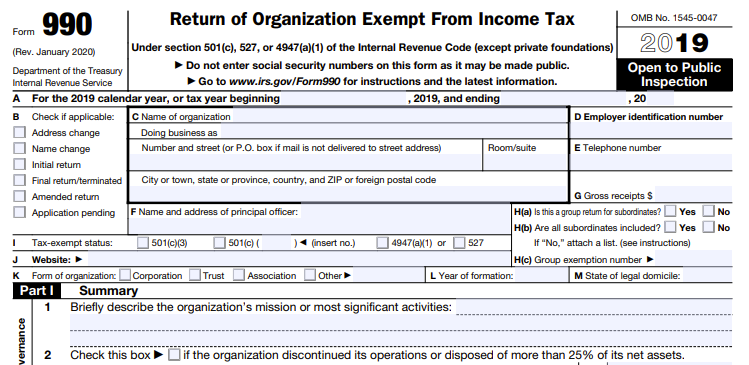
Form 990 is not simply a statement of income and expenses. Depending on the organization and its activities, the return can cover areas such as:
- Revenue and expenses
- Assets and liabilities
- Programs and activities
- Compensation
- Governance
- Certain related organizations and transactions
- Fundraising activities
- Other information required under federal tax rules
Most tax-exempt organizations that have an annual filing requirement must submit either an annual information return or annual electronic notice. The specific filing depends on the organization’s circumstances.
For smaller organizations, filing Form 990 may not be necessary. An eligible organization may instead file Form 990-EZ or Form 990-N.
Form 990 vs. 990-EZ vs. 990-N: Which Form Does Your Nonprofit Need?
The main difference between Form 990, Form 990-EZ, and Form 990-N is the organization’s financial size and the type of annual filing it is eligible to submit.
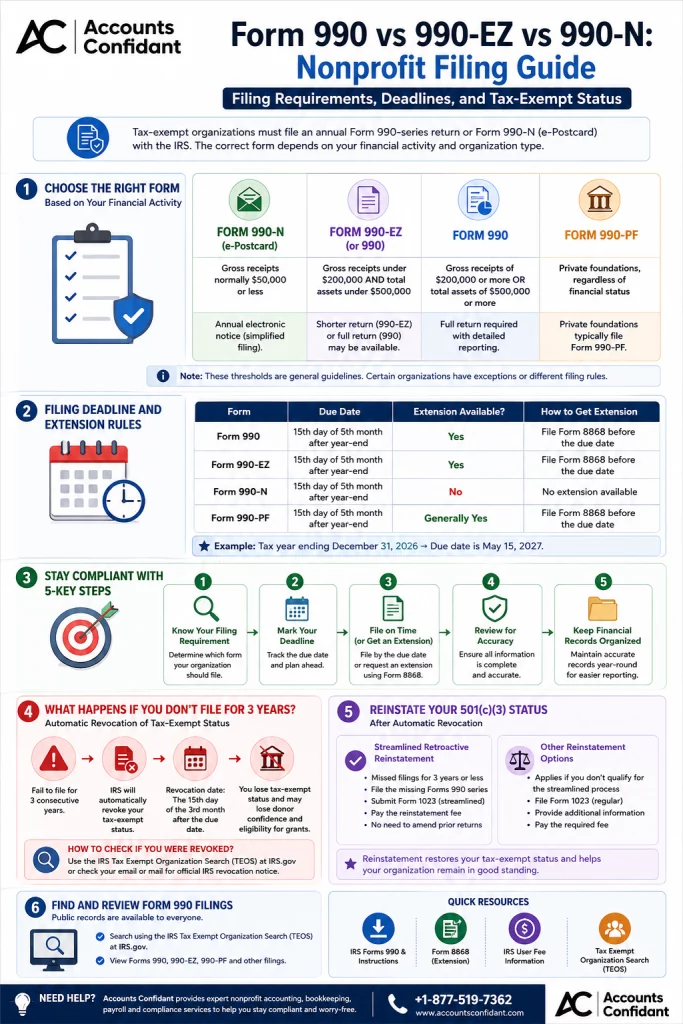
The IRS currently provides the following general framework:
| Filing | General financial threshold |
| Form 990-N | Gross receipts normally $50,000 or less |
| Form 990-EZ or Form 990 | Gross receipts under $200,000 and total assets under $500,000 |
| Form 990 | Gross receipts of $200,000 or more, or total assets of $500,000 or more |
| Form 990-PF | Private foundations, regardless of financial status |
An organization eligible to file Form 990-N may choose to file a full return instead. An organization meeting the Form 990-EZ threshold may generally choose Form 990-EZ or Form 990.
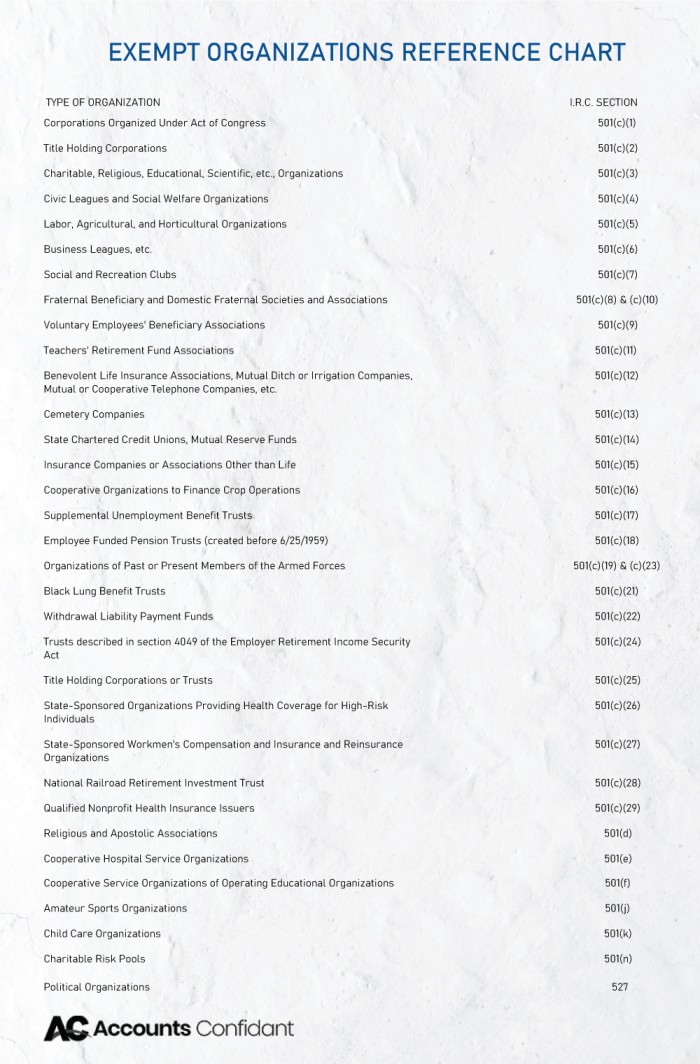
These thresholds should not be treated as the only factor in determining a nonprofit’s filing requirement. Certain organizations have specific exceptions or different filing rules. For example, private foundations generally file Form 990-PF regardless of their financial size.
The distinction between “gross receipts” and profit is important. Gross receipts are not the same as net income after expenses. IRS Form 990-EZ instructions define gross receipts as the total amounts received from all sources during the organization’s annual accounting period, without subtracting costs or expenses.
Organizations should also review the IRS instructions for their specific type of tax-exempt organization because exceptions and special filing requirements can apply.
Form 990 Filing Deadline and Extension Rules
| Form | Due Date | Extension Available? |
| Form 990 | 15th day of 5th month | Yes, Form 8868 |
| Form 990-EZ | 15th day of 5th month | Yes, Form 8868 |
| Form 990-N | 15th day of 5th month | No extension |
| Form 990-PF | 15th day of 5th month | Generally, extension available |
The IRS does not assess a penalty simply because Form 990-N was submitted late. However, repeated failure to submit the required e-Postcard can eventually result in automatic revocation of the organization’s tax-exempt status.
IRS form 990 instructions
The following are instructions that will help you fill out the IRS 990 form properly:
- Firstly, mention the name of the corporation and its address at the beginning of the form.
- Note down the Employer Identification Number
- Select the type of tax return that the corporation files.
- Enter the date and place of incorporation on lines 1 and 2 respectively.
- Select partial or complete liquidation in line 3.
- You have to write the date for when the plan of partial or complete liquidation was adopted on line 4.
- Mention the IRS Service Center where the preceding tax return was filed on line 5.
- Note down the last month, day and year of the preceding tax year and the final tax year on lines 6 and 7a respectively.
- Check “Yes” or “No” in line 7b to answer whether the corporation’s final tax return was filed.
- If you check “Yes,” enter the name of the common parent under which the consolidated return was filed and its employer identification number.
- Enter the aggregate number of shares that were outstanding when the dissolution of the business was approved on line 8.
- Mention any dates on which amendments to the dissolution plan were adopted on line 9.
- Fill out the section of the Internal Revenue Code under which the corporation is to be dissolved on line 10.
- Provide the date of any IRS form 990 that was filed previously on line 11.
- Attach the resolution or plan in which the dissolution of the business or was approved and all amendments not previously filed.
- Finally, sign and date the form.
Common errors to avoid while filing form 990
The following are some of the most commonly occurring errors that one can commit while filing the IRS form 990:
- Failing to complete Schedule A. You can fill this section of the form when you are a charitable trust. In this section, highly-paid independent contractors and top officials’ benefits and salaries are present.
- Failing to note primary exempt mission as required in the statement of program accomplishments.
- Arithmetic errors account for about 20% of all 990 tax returns like not having the signature of any of the organization’s officers or failing to attach required supporting schedules.
What Happens If a Nonprofit Doesn’t File Form 990 for 3 Years?
Failing to file a required annual return for one year is a compliance issue. Failing to file for three consecutive years can have a much more serious consequence.
Under the automatic revocation rules, an organization that is required to file Form 990, Form 990-EZ, Form 990-PF, or Form 990-N and fails to do so for three consecutive years automatically loses its federal tax-exempt status. The revocation becomes effective on the original filing due date of the third missed annual return or notice.
The rule applies to required filings. It does not mean that every nonprofit automatically loses its exemption after three years simply because it did not file Form 990; some organizations are not subject to the annual filing requirement. Churches and certain church-related organizations, for example, are among the organizations that can have different annual filing requirements.
The IRS also sends organizations a notice after two consecutive years of failing to file, intended to provide information about complying before the third missed year results in automatic revocation.
How Can a Nonprofit Lose Tax-Exempt Status?
A nonprofit can lose its federal tax-exempt status through automatic revocation when it fails to submit its required annual return or notice for three consecutive years.
The IRS maintains an Automatic Revocation List containing organizations whose status was automatically revoked because of this filing failure. The list includes information such as the organization’s name, EIN, exemption type, revocation date, and the date it was added to the list.
It is important to distinguish automatic revocation for nonfiling from other situations in which an organization may lose its exemption. This article focuses specifically on the automatic revocation rules resulting from missed annual Form 990-series filings or Form 990-N notices.
What Happens After Automatic Revocation?
Once an organization’s federal tax-exempt status has been automatically revoked, it may have additional federal tax filing and tax-payment obligations. The IRS states that organizations that lose their exemption may need to file federal income tax returns and pay applicable income taxes.
Automatic revocation does not simply disappear because the organization later catches up on its missed annual filings. The organization must follow the applicable IRS reinstatement procedure to seek recognition of its tax-exempt status again.
How to Reinstate 501(c)(3) After Revocation
If a 501(c)(3) organization’s tax-exempt status was automatically revoked, the organization may apply for reinstatement.
The exact procedure depends on factors such as the organization’s filing history, whether it has previously been automatically revoked, which annual return it was eligible to file, and how much time has passed since the revocation.
For 501(c)(3) organizations, the applicable reinstatement procedures involve Form 1023 or, where the organization qualifies, Form 1023-EZ. The IRS provides different procedures for organizations seeking reinstatement under different circumstances.
Streamlined Retroactive Reinstatement
A small organization may qualify for a streamlined retroactive reinstatement procedure under the IRS rules.
According to the IRS Form 1023 instructions, an organization may use the streamlined procedure when:
- It was eligible to file Form 990-EZ or Form 990-N for each of the three consecutive years that resulted in automatic revocation.
- It is being automatically revoked for the first time.
- The application is submitted no later than 15 months after the later of the date of the IRS revocation letter or the date the organization’s name was posted on the Auto-Revocation List.
The organization must also attest that its failure to file was not intentional and that it has established procedures to ensure required returns or notices are filed in the future.
Not every revoked organization qualifies for this streamlined process. For example, an organization that has been automatically revoked more than once cannot use the Section 4 streamlined procedure described in the Form 1023 instructions. Other reinstatement procedures may still be available.
Other Reinstatement Procedures
Organizations that do not qualify for streamlined reinstatement may need to use another reinstatement procedure.
The IRS provides different procedures depending on the organization’s circumstances, including procedures involving reasonable cause and retroactive reinstatement. The appropriate procedure should be determined from the organization’s specific facts rather than assuming that every revoked nonprofit can use the same application process.
Because reinstatement affects federal tax-exempt status, organizations dealing with an automatic revocation should carefully review the applicable IRS procedure and filing requirements before submitting an application.
How Can You Find a Nonprofit’s Form 990 Filing?
Form 990 filings are generally available to the public. The IRS provides an online Tax Exempt Organization Search (TEOS) tool that can be used to look up nonprofit filings and tax-exempt status information.
The IRS search tool includes databases for:
- Form 990-series returns
- Form 990-N e-Postcard filings
- Automatic Revocation of Exemption List
- Determination letters
- Publication 78 data
You can search by the organization’s EIN or organization name. Searching by EIN can be useful when multiple organizations have similar names.
The IRS states that Form 990-series returns filed since January 2018 can be viewed through Tax Exempt Organization Search. The system also provides access to Form 990-N filings and other tax-exempt organization information.
If a nonprofit appears on the Auto-Revocation List, that does not necessarily mean it is still revoked. The IRS notes that an organization may have subsequently been reinstated. Users can check the organization’s current status through the applicable IRS databases and determination letter information.
A Simple Way to Stay on Top of Form 990 Compliance
Annual nonprofit filing is easier to manage when it becomes part of the organization’s regular compliance calendar rather than a once-a-year emergency.
A nonprofit can establish a routine around a few key steps:
- Confirm the tax year: The end of the organization’s accounting period determines the annual filing deadline.
- Review gross receipts and assets: These figures help determine which Form 990-series filing may apply.
- Check for special filing rules: Some types of tax-exempt organizations have exceptions or different filing requirements.
- Calendar the filing deadline: For Form 990 and 990-EZ, determine whether an extension is needed. For Form 990-N, remember that extensions are not available.
- Keep financial records organized throughout the year: Accurate accounting records provide the information needed to complete the organization’s annual reporting.
- Confirm that the filing was successfully submitted: Keep copies and confirmation records for the organization’s files.
- Check the organization’s IRS status if filings have been missed: If the organization has missed multiple consecutive filing years, determine whether it appears on the IRS Auto-Revocation List.
Conclusion
Understanding the difference between Form 990, 990-EZ, and 990-N is an important part of maintaining nonprofit compliance. The filing deadline also matters. For most annual returns, the due date is the 15th day of the fifth month following the end of the organization’s accounting period. Form 990-N follows the same general deadline but cannot be extended.
Most importantly, nonprofits should not treat annual filing as optional simply because they are small. An organization that is required to file but fails to submit its required return or notice for three consecutive years can automatically lose its federal tax-exempt status.
If revocation has already occurred, reinstatement may be possible, but the appropriate procedure depends on the organization’s circumstances. Reviewing the IRS rules early can help the organization determine which reinstatement path applies and what additional filings or documentation may be required.
Frequently Asked Questions
What is IRS Form 990 and does my nonprofit need to file it?
Form 990 is an annual information return used by many tax-exempt organizations to report information about their finances, activities, governance, and compliance. Whether a nonprofit must file Form 990 depends on its financial situation and the specific filing rules that apply to the organization. Smaller eligible organizations may instead file Form 990-EZ or Form 990-N.
What’s the difference between Form 990, 990-EZ, and 990-N?
Form 990 is the full annual information return. Form 990-EZ is a shorter return generally available when gross receipts are under $200,000 and total assets are under $500,000. Form 990-N is an electronic notice generally available to most small tax-exempt organizations whose gross receipts are normally $50,000 or less.
When is Form 990 due for a nonprofit?
Form 990 is generally due on the 15th day of the fifth month after the end of the organization’s accounting period. For a calendar-year nonprofit, that generally means May 15 of the following year. An organization can generally request an automatic six-month extension using Form 8868.
What happens if a nonprofit doesn’t file Form 990 for 3 years?
If a nonprofit is required to file an annual Form 990-series return or Form 990-N and fails to file for three consecutive years, its federal tax-exempt status is automatically revoked. The revocation becomes effective on the due date of the third consecutive missed return or notice.
How do I get my nonprofit’s tax-exempt status back after it was revoked?
An organization whose exemption was automatically revoked can apply for reinstatement under the applicable IRS procedures. For 501(c)(3) organizations, the appropriate application may be Form 1023 or Form 1023-EZ when the organization qualifies for that procedure. Certain organizations may qualify for retroactive reinstatement, while others must follow different procedures.
How can I find a nonprofit’s Form 990 filing?
You can use the IRS Tax Exempt Organization Search to search for Form 990-series returns, Form 990-N filings, determination letters, and automatic revocation information. The search can be performed using the organization’s name or EIN.