Many taxpayers are surprised when they receive a tax bill after using Marketplace health insurance. The reason is often related to the difference between the Advance Premium Tax Credit (APTC) they received during the year and the actual Premium Tax Credit (PTC) they qualify for based on their final income.
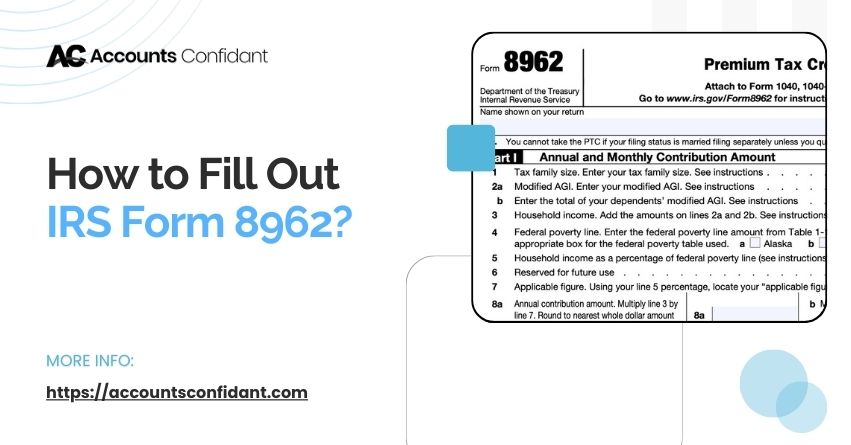
IRS Form 8962 is used to reconcile Premium Tax Credit amounts and determine whether you receive an additional credit or need to repay excess advance payments.
This form connects three important pieces:
- Your Marketplace health insurance information
- Your household income
- The premium assistance you received during the year
For 2026 tax filings, Form 8962 has become even more important because new rules changed how excess APTC repayment works.
This guide explains how Form 8962 works, who must file it, how to complete it, what changed in 2026, and how to avoid common mistakes.
What Is IRS Form 8962?
IRS Form 8962 is the form used to calculate and reconcile your Premium Tax Credit with the Advance Premium Tax Credit already paid on your behalf.
The Premium Tax Credit (PTC) helps eligible taxpayers reduce the cost of Marketplace health insurance.
Many people do not wait until filing their tax return to receive this credit. Instead, they choose to receive part of the credit in advance.
This advance payment is called:
Advance Premium Tax Credit (APTC)
At tax time, the IRS compares:
- The APTC you received
- The PTC you actually qualify for
This process is called reconciliation.
If you received:
- Less APTC than allowed → you may receive an additional credit.
- More APTC than allowed → you may need to repay the difference.
Who Must File Form 8962?
You generally must file Form 8962 if you received Advance Premium Tax Credit for Marketplace health insurance coverage.
You usually need Form 8962 when:
- You received Form 1095-A from the Health Insurance Marketplace
- APTC was paid to your insurance company
- You want to claim the Premium Tax Credit
Form 8962 is attached to your federal income tax return, such as:
- Form 1040
- Form 1040-SR
- Form 1040-NR (when applicable)
You may also need it if your Marketplace information changed during the year.
Examples:
- Income changed
- Household size changed
- Marriage occurred
- A dependent was added or removed
How Does Premium Tax Credit Reconciliation Work?
Form 8962 compares your estimated Marketplace subsidy with the credit you actually qualify for based on your final tax information.
When you enroll in Marketplace coverage, the insurance exchange estimates your yearly income.
Because your actual income may be different, the subsidy amount can change.
Example:
At the beginning of the year:
- Estimated income: $40,000
- Marketplace provides $6,000 APTC
At tax time:
- Actual income: $50,000
- Allowed PTC: $5,000
Result:
- APTC received: $6,000
- Allowed PTC: $5,000
- Excess APTC: $1,000
The taxpayer may need to repay the $1,000 difference.
What Is Form 1095-A, and Why Is It Needed for Form 8962?
Form 1095-A provides the Marketplace information needed to complete Form 8962.
The Health Insurance Marketplace sends Form 1095-A to people who had Marketplace coverage.
- It includes important details such as:
- Monthly enrollment premiums
- Premium assistance amounts
- Second Lowest Cost Silver Plan (SLCSP) premium
- Coverage months
You cannot accurately complete Form 8962 without the correct Form 1095-A information.
Common mistakes happen when taxpayers:
- Enter numbers from memory
- Use the wrong year’s 1095-A
- Ignore a corrected 1095-A
Always use the latest Form 1095-A received from the Marketplace.
What Changed for Form 8962 in 2026?
Beginning in 2026, new rules eliminate previous repayment caps on excess Advance Premium Tax Credit.
Previously, some taxpayers had limits on how much excess APTC they had to repay based on household income.
These limits protected certain lower and middle-income taxpayers from very large repayment amounts.
For 2026 and later years, those repayment limits are removed.
This means:
If you received more APTC than you were eligible for, you may need to repay the full excess amount.
How Did APTC Repayment Work Before 2026?
Before 2026, some taxpayers had a maximum repayment limit depending on their income level.
Example:
A taxpayer received $3,000 more APTC than they qualified for.
Under previous rules, their repayment might have been limited depending on their household income percentage of the Federal Poverty Line (FPL).
The repayment cap reduced the financial impact.
What Happens If You Received Too Much APTC in 2026?
If your Advance Premium Tax Credit is higher than your allowed Premium Tax Credit, the difference becomes additional tax you may owe.
Form 8962 calculates this difference.
Important lines include:
- Line 24: Total Premium Tax Credit
- Line 25: Total Advance Premium Tax Credit
- Line 26: Excess Advance Premium Tax Credit
- Line 27: Net Premium Tax Credit
- Line 28: Repayment amount
- Line 29: Repayment limitation
Because repayment caps are removed for 2026, excess APTC may create a larger tax balance.
Example:
APTC received:
$8,000
Allowed PTC:
$5,000
Excess APTC:
$3,000
The taxpayer may need to repay the full $3,000.
How to Fill Out Form 8962 Step by Step
Form 8962 has five parts that calculate your eligibility, credit amount, and repayment responsibility.
Part I: Annual and Monthly Contribution Amount
Part I calculates your household contribution amount based on income and family size.
This section uses information such as:
- Household income
- Modified Adjusted Gross Income (MAGI)
- Federal Poverty Line percentage
- Tax family size
The IRS uses this information to determine how much you are expected to contribute toward health insurance premiums.
Part II: Premium Tax Credit Claim and Reconciliation
Part II compares your allowed Premium Tax Credit with the Advance Premium Tax Credit already received.
This is the main reconciliation section.
Important calculations include:
Line 24: Total Premium Tax Credit
Shows the PTC you are allowed based on your final tax information.
Line 25: Total Advance Premium Tax Credit
Shows the subsidy already paid during the year.
Line 26: Excess APTC
Shows the amount received above your allowed credit.
Line 27: Net Premium Tax Credit
Shows whether you receive an additional credit or have excess payments.
Part III: Repayment of Excess Advance Premium Tax Credit
Part III determines how much excess APTC must be repaid.
Before 2026, Line 29 repayment limitations could reduce repayment amounts for qualifying taxpayers.
For 2026:
The repayment cap is eliminated.
This makes accurate income estimates during Marketplace enrollment more important.
Part IV: Shared Policy Allocation
Part IV is used when two tax families share the same Marketplace insurance policy.
This situation can happen when:
- Divorced parents share coverage for a child
- Unmarried couples share one Marketplace plan
- Individuals who file separate returns are on the same policy
The taxpayers must allocate:
- Premiums
- SLCSP amounts
- APTC amounts
The allocation percentage can affect each person’s Form 8962 calculation.
Example:
Two tax families share one policy.
They agree:
- Person A: 60%
- Person B: 40%
Each person reports their allocated share on their own Form 8962.
Part V: Alternative Calculation for Year of Marriage
Part V may reduce repayment when taxpayers got married during the tax year.
Marriage can change:
- Household size
- Income calculation
- Premium Tax Credit eligibility
Without the alternative calculation, a spouse who received APTC before marriage may face a higher repayment amount.
The alternative calculation allows certain taxpayers to calculate eligibility using a special method.
Form 8962 vs Form 8965: What Is the Difference?
Form 8962 handles Premium Tax Credit reconciliation, while Form 8965 was used for ACA health coverage exemptions.
| Feature | Form 8962 | Form 8965 |
| Purpose | Reconcile Marketplace subsidies | Claim health coverage exemptions |
| Status | Still used | Obsolete federally |
| Main document | Form 1095-A | ACA exemption information |
| Current use | Required for eligible APTC recipients | Mainly historical/amended returns |
What Happens If You Do Not File Form 8962?
Failing to file Form 8962 when required can delay your tax return and affect future Premium Tax Credit eligibility.
Possible problems include:
- IRS processing delays
- Refund delays
- IRS requests for information
- Loss of future Marketplace advance credits
If you receive Form 1095-A, review whether Form 8962 is required before submitting your return.
Form 8962 for Self-Employed Taxpayers
Self-employed individuals often need careful Form 8962 planning because income can change significantly during the year.
Many self-employed taxpayers have variable income.
Examples:
- Business owners
- Freelancers
- Independent contractors
A large income difference between estimated and actual income can change PTC eligibility.
Keeping income estimates updated during the year can reduce unexpected repayment.
Form 8962 for Expats
Expats may need Form 8962 if they received Marketplace coverage and Advance Premium Tax Credit.
Living abroad does not automatically remove all tax filing responsibilities.
Expats should review:
- Residency status
- Marketplace eligibility
- Foreign income reporting
- Household income calculations
ACA rules can become complicated when foreign income affects MAGI.
Common Form 8962 Mistakes
Most Form 8962 errors happen because taxpayers enter incorrect Marketplace information or misunderstand household calculations.
Common mistakes include:
Using Wrong Form 1095-A Information
A corrected Form 1095-A may change the calculation.
Incorrect Household Size
Family size must match your tax return.
Wrong Income Amount
Premium Tax Credit depends heavily on household income.
Forgetting Shared Policy Allocation
Part IV may be required when multiple tax families share coverage.
Confusing Form 8962 With Form 8965
They solve different ACA issues.
Filing Without Form 1095-A
The IRS needs Marketplace data to complete reconciliation.
Case Study: How 2026 Repayment Changes Can Affect Taxpayers
Accurate income estimates are more important because excess APTC repayment can be larger under the 2026 rules.
A family estimates their annual income at $45,000 when applying for Marketplace coverage.
Based on this estimate, they receive:
- $9,000 APTC during the year
At tax time, their actual income is higher.
Their allowed PTC is:
- $6,000
Difference:
- Excess APTC: $3,000
Under older repayment limitation rules, their repayment may have been reduced depending on income level.
Under 2026 rules, repayment caps no longer protect taxpayers from the full excess amount.
The lesson:
Updating Marketplace income estimates during the year can help prevent unexpected tax bills.
Final Thoughts
Form 8962 is the key form that connects Marketplace health insurance subsidies with your actual tax situation.
The most important points are:
- Form 8962 reconciles PTC and APTC.
- Form 1095-A provides the information needed to complete it.
- Income changes can significantly affect your final credit.
- 2026 rules remove previous repayment caps on excess APTC.
- Shared policies and marriage changes require extra care.
Reviewing your Marketplace information throughout the year and updating income estimates when needed can help prevent unexpected repayment when filing your tax return.
Frequently Asked Questions About Form 8962
What is IRS Form 8962?
Form 8962 is used to reconcile Premium Tax Credit amounts with Advance Premium Tax Credit payments received through Marketplace insurance.
Do I need Form 8962 with Form 1095-A?
Yes, if you received Advance Premium Tax Credit, Form 8962 is generally required.
What changed for Form 8962 in 2026?
Repayment caps for excess APTC were eliminated, meaning eligible taxpayers may need to repay the full excess amount.
What happens if I received too much APTC?
The excess amount is calculated on Form 8962 and may increase your tax balance.
What is shared policy allocation on Form 8962?
It is the process of dividing Marketplace policy amounts between separate tax families who share one insurance policy.